

What No One Tells You About the Maldives
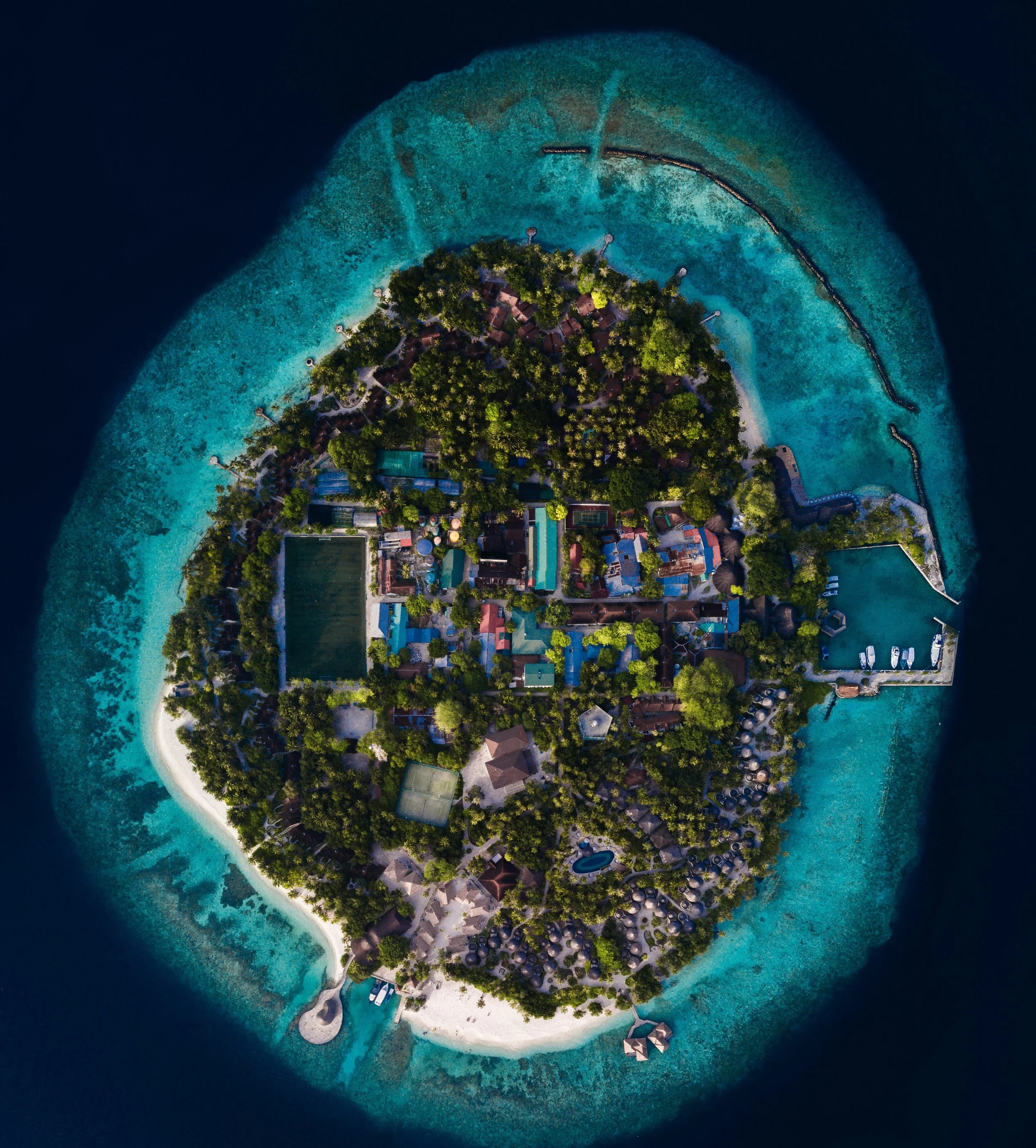
Photo by Zidhan Ibrahim on Unsplash
The Maldives is one of the most searched honeymoon destinations in the world. It is also one of the most misunderstood.
The images are familiar: an overwater bungalow on stilts above a turquoise lagoon, a couple on a private deck, the ocean extending in every direction, silence except for the water. That image is accurate. It is also incomplete in ways that matter quite a bit when you are planning a trip of this significance.
What follows is the version of the Maldives conversation we have with nearly every client who puts it on their list. Not to talk anyone out of it, but to make sure the trip they book is the trip they actually want.
The Geography Is Not What Most People Expect
The Maldives is not a single island. It is an archipelago of 26 atolls spread across roughly 900 kilometers of the Indian Ocean, containing more than 1,000 individual islands. The resort islands are private: each one is leased to a single property, which means when you arrive at your resort, that island is your world for the duration of your stay.
There is no town to wander into. No local restaurant down the road. No market, no nightlife, no encounters with the country outside the resort ecosystem unless you specifically arrange for them.
For some couples, this is exactly right. The containment is the point. The world narrows to a lagoon and a few hundred meters of sand and the person you came with.
For others, it becomes claustrophobic by day three. We have had clients tell us they felt trapped by day four, not because the resort was inadequate, but because they had not genuinely thought through what a week with no external stimulus actually feels like.
The Maldives rewards self-knowledge. Before booking, it is worth asking honestly: how do you feel about stillness?
The Travel Is Longer Than It Looks
Most international flights arrive at Velana International Airport in Malé, the capital. From there, reaching your resort requires at minimum one additional transfer, and often two.
Resorts in the North and South Malé Atolls are accessible by speedboat, which takes between 20 and 90 minutes depending on the property. Resorts in more remote atolls require a domestic flight, typically a small propeller plane, followed by a speedboat transfer. Some of the most exclusive properties are three or more hours from Malé by this route.
The seaplane transfers, which fly during daylight hours only, are genuinely beautiful. They are also subject to weather delays, have strict luggage limitations, and require careful coordination with international arrival times. We have seen couples land in Malé after a long-haul flight to find their seaplane window has closed and their transfer pushed to the following morning.
None of this is insurmountable. But it requires planning at a level of detail that most couples do not anticipate when they start researching on their own.
Not All Atolls Are Created Equal
The choice of which atoll and which resort to stay in shapes the entire experience, far more than the room category or the amenities.
The North Malé Atoll, being closest to the airport, has the highest concentration of resorts, including several of the brand names most couples recognize. Accessibility is excellent. The trade-off is that the lagoon can feel busier and the sense of true remoteness is diminished.
The Baa Atoll is a UNESCO Biosphere Reserve and home to some of the finest snorkeling and diving in the Maldives, particularly for manta ray encounters at Hanifaru Bay during certain months. Resorts here tend to attract guests with a genuine interest in the underwater environment.
The southern atolls, including Addu and the Huvadhu Atoll, offer the most extreme sense of isolation, reached by long domestic flights and multi-leg transfers. The payoff is a version of the Maldives that feels genuinely untrafficked.
Matching the right atoll to what a couple actually wants from the trip is something we spend real time on. It is not a decision that should come down to which resort has the best photography.
What the All-Inclusive Model Really Means
Maldives resorts operate at price points that shock most first-time visitors. The base room rate is significant. Food, beverage, excursions, spa treatments, and water activities are typically priced on top of that, and at a scale that can be startling when the bill arrives.
Some resorts offer all-inclusive packages that fold these costs together. Whether this is actually advantageous depends on how you travel. Couples who drink wine at dinner, who want daily excursions, who will use the spa: the all-inclusive often works in their favor. Couples who are light eaters, who prefer to spend time on the deck rather than on boats, who do not drink: they may find they are paying for things they do not use.
We help clients work through this calculation before they book, not after. The difference between the right package and the wrong one can be several thousand dollars over the course of a week's stay.
The Seasons Matter More Than Most Guides Acknowledge
The Maldives has two primary seasons. The dry season runs roughly from November through April, bringing calmer seas, lower humidity, and better visibility for snorkeling and diving. This is peak season, and prices reflect it.
The wet season, from May through October, brings the southwest monsoon. Rain in the Maldives tends to arrive in intense, short bursts rather than sustained grey days. Many couples who visit during this period have a perfectly beautiful trip. Others encounter several days of rough seas and limited activity options.
The shoulder months of May and October are particularly variable and worth examining carefully. We look at historical weather patterns by atoll and by specific property when advising clients on timing, because conditions can differ meaningfully across the archipelago even within the same week.
What We Know That Search Engines Do Not
We have visited these properties. We know which resort's overwater bungalows have direct lagoon access from the deck and which require stairs to a floating platform. We know which house reef is genuinely walkable from the beach and which requires a boat to reach anything worth seeing. We know which restaurants are actually good and which ones rely entirely on the captive audience model.
We know which properties handle the small details of a honeymoon well: the turndown with rose petals that does not feel performative, the staff who remember names, the excursions that are actually led with care rather than processed efficiently.
We also know the things that go wrong and how specific properties handle them, because how a resort responds to a problem matters as much as whether a problem occurs.
This is the kind of knowledge that takes years to accumulate and cannot be extracted from a review site.
A Destination Worth Doing Right
The Maldives at its best is an extraordinary place to begin a marriage. The sense of having stepped entirely out of the world, of having nowhere to be and nothing to do but be present with each other, is something very few destinations can offer.
Getting there requires matching the right resort to the right couple, at the right time of year, with the logistics handled carefully enough that the journey itself does not become the story.
If the Maldives is on your list, we would love to help you think through what the right version of it looks like for you.
REYA Travel Co. specializes in honeymoons, destination weddings, and romantic travel for couples who want every detail handled. Every moment felt.